











Mathare Social Justice Centre, Gacheke Gachihi, Waringa Wahome and the Politics of Celebrity Activism
The Central Organising Committee of the Communist Party Marxist Kenya considers it necessary to openly address the increasingly negative role played by sections of the so called social justice movement, particularly individuals associated with Mathare Social Justice Centre, whose conduct has come to embody the politics of celebrity activism, NGO dependency, opportunism, and hostility towards revolutionary organisation.
This statement is not about personalities. It is about politics. It is about class stand. It is about whether one serves the people or serves oneself.
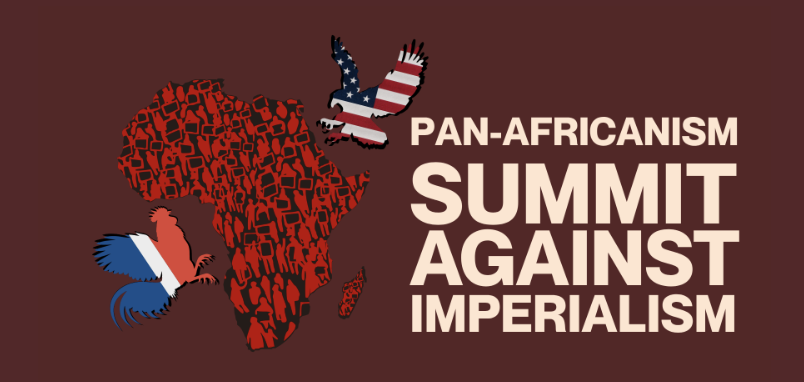
The Pan African Summit Against Imperialism (PASAI) brought together revolutionary, anti imperialist, progressive, trade union, youth, women’s, and people’s organisations from across Africa and the world in a collective effort to strengthen the struggle against imperialism, neocolonialism, Zionism, and capitalist exploitation. PASAI was conceived as a forum for political coordination, ideological exchange, and the strengthening of anti imperialist organisation.
It is therefore necessary to explain why the conduct of certain individuals during this process became a matter of political concern.
During the preparations and proceedings of PASAI, serious discussions emerged concerning the participation of self invited individuals who had previously abandoned Party discipline, rejected collective organisational work, and distanced themselves from revolutionary structures. Among the most prominent of these individuals were Gacheke Gachihi and Waringa Wahome.
Even after the PASAI Working Committee made clear that they were not invited participants owing to their conduct during previous Party processes, the two individuals insisted that they would merely attend in order to briefly meet Professor Vijay Prashad before departing. This explanation quickly proved to be a convenient pretext for gaining access to a process to which they had made no organisational contribution and for which they had accepted no responsibilities.
The Party had already accumulated substantial experience regarding these individuals. During the Party Theoretical Conference they were accommodated despite contributing nothing meaningful towards the conference organization. They were allowed to participate in the process and benefit from the goodwill of the Party. Yet once the conference concluded, they abandoned commitments, failed to participate in follow up work, and demonstrated little regard for the collective responsibilities they had accepted.
The events surrounding PASAI merely confirmed what had already become apparent.
Despite making no contribution to the organisation of the summit, they sought visibility within it. Despite accepting no responsibilities, they sought recognition from it. Despite rejecting organisational discipline, they attempted to project themselves as central actors within a process built through the sacrifices of workers, peasants, revolutionary youth, and anti imperialist organisations from across the world.
What emerged was not revolutionary commitment but the politics of spectacle.
The Treatment of International Guests and the Question of Revolutionary Ethics
It is important to expose Wahome, Gacheke, and sections of the Social Justice Centre. On the day the international guests were released from prison, the two former comrades misused their proximity to the comrades to misdirect them and later demand a ransom from the Party, literally detaining the comrades under the pretext of a legal fee that did not exist, since all legal filings and dealings with the lawyers had already been handled by the Party’s Legal League.
This episode revealed more than an isolated act of misconduct. It exposed a deeper political degeneration. Revolutionary processes were treated as opportunities for personal manoeuvring rather than collective struggle. International comrades who had come in solidarity with the anti imperialist movement became the object of competing influences and political opportunism. Such conduct stands in direct contradiction to the principles of proletarian internationalism, collective discipline, and revolutionary integrity upon which the communist movement is built.
Following PASAI, the Central Organising Committee became aware that some of international comrades had been approached with requests for financial assistance purportedly intended for local comrades allegedly facing sickness, starvation, and extreme hardship. The Party conducted inquiries through its own structures and found no basis for a number of the claims that had been presented. On the basis of these findings, the Central Organising Committee concluded that these appeals amounted to what the Party regards as the political extortion of international comrades under the pretext of sickness and starvation. The Party considers such conduct a grave violation of revolutionary ethics, one that undermines proletarian internationalism, damages trust between revolutionary organisations, and exploits relations of solidarity for purposes incompatible with the principles of the revolutionary movement.
The Misrepresentation of Contradictions
The Central Organising Committee also recalls the role played by these individuals in presenting to the Party a particular interpretation of the crisis and eventual split within sections of the social justice movement.
At the time, the contradiction was presented as a profound struggle of political principles, a confrontation between an anti imperialist tendency and an opposing tendency allegedly aligned with imperialist interests.
The Central Organising Committee’s assessment is unequivocal. Subsequent developments did not strengthen that narrative. On the contrary, they confirmed the Party’s conclusion that the contradiction was fundamentally characterised by organisational rivalries, personal antagonisms, competition for influence, and conflicts rooted within the sphere of NGO politics. What had been presented as a confrontation between anti imperialist and imperialist tendencies increasingly revealed itself to be disconnected from the concrete tasks of revolutionary struggle and the interests of the working masses. The invocation of anti imperialist language served to obscure rather than clarify the real nature of the contradiction.
The Party therefore rejects attempts to portray these disputes as principled ideological struggles and maintains that they represented a manifestation of political degeneration, opportunism, and organisational decay increasingly associated with NGO driven activism.
The Question of Lumpenisation
One of the most destructive consequences of prolonged immersion in NGO politics and petty bourgeois activism is political and ideological lumpenisation.
Lumpenisation is not merely a social condition. It is a political degeneration.
It manifests itself when collective responsibility is replaced by individual gain. It manifests itself when revolutionary commitment is replaced by personal advancement. It manifests itself when service to the people is replaced by the pursuit of influence, recognition, visibility, and material advantage.
The revolutionary movement is sustained through sacrifice and collective effort. The Party is not a marketplace. The Party is not a contracting agency. The Party is not a source of personal livelihood. The Party is an instrument of class struggle.
A dangerous mentality develops when individuals begin to approach revolutionary politics as a transactional relationship. Instead of asking what they can contribute to the struggle, they begin asking what they can obtain from it. Instead of serving collective interests, they begin measuring every political activity according to personal benefit.
Such tendencies represent the complete inversion of proletarian values.
The communist militant enters struggle to serve the people.
The opportunist enters struggle to serve himself.
The communist militant understands sacrifice.
The opportunist understands transactions.
The communist militant seeks collective victory.
The opportunist seeks individual recognition.
This mentality is fundamentally alien to communist ethics.
Mathare Social Justice Centre and the Crisis of NGO Politics
The experience of recent years demonstrates the limitations and dangers of NGO driven activism. Detached from revolutionary organisation and lacking accountability to the working class, such politics inevitably drifts towards liberalism, careerism, opportunism, and hostility towards disciplined political organisation.
This tendency has increasingly become associated with sections of Mathare Social Justice Centre. What was once presented as a vehicle for popular struggle has increasingly become dominated by a culture of celebrity activism, NGO dependency, and individual prominence.
Instead of cultivating disciplined cadres rooted among workers and poor peasants, such politics increasingly cultivates personalities whose political existence depends upon visibility, donor networks, media attention, and the cultivation of personal influence.
The result is a political practice that values media visibility above organisation, public recognition above accountability, and individual personalities above collective leadership.
Such politics cannot advance the National Democratic Revolution.
The National Democratic Revolution requires discipline.
The National Democratic Revolution requires sacrifice.
The National Democratic Revolution requires accountability.
The National Democratic Revolution requires cadres who subordinate personal interests to collective interests.
The revolutionary movement cannot be transformed into a stage for self promotion.
It cannot be reduced to a platform for political celebrities.
It cannot be subordinated to NGO agendas and liberal individualism.
The Central Organising Committee therefore calls upon all genuine revolutionaries to reject opportunism, reject celebrity activism, reject liberal individualism, reject lumpenisation, and recommit themselves to the difficult but necessary task of building disciplined revolutionary organisation among the workers, peasants, youth, women, and oppressed masses.
Revolution is not a performance.
Revolution is not a career.
Revolution is not a personal brand.
Revolution is the organised struggle of the masses for power.
Those who place themselves above the collective inevitably place themselves outside the revolutionary path.
Central Organising Committee
Communist Party Marxist Kenya